We have a postdoctoral position available working on the design and synthesis of new hypervalent iodine reagents.
Start date: on or around 1 July 2025 (and no later than 1 September 2025). Duration: 1 year. Application deadline: 19 May 2025.
For more information and to apply, go to: https://jobs.nottingham.ac.uk/Vacancy.aspx?ref=SCI138525
Author: oduillgroup
Electronic Lab Notebooks
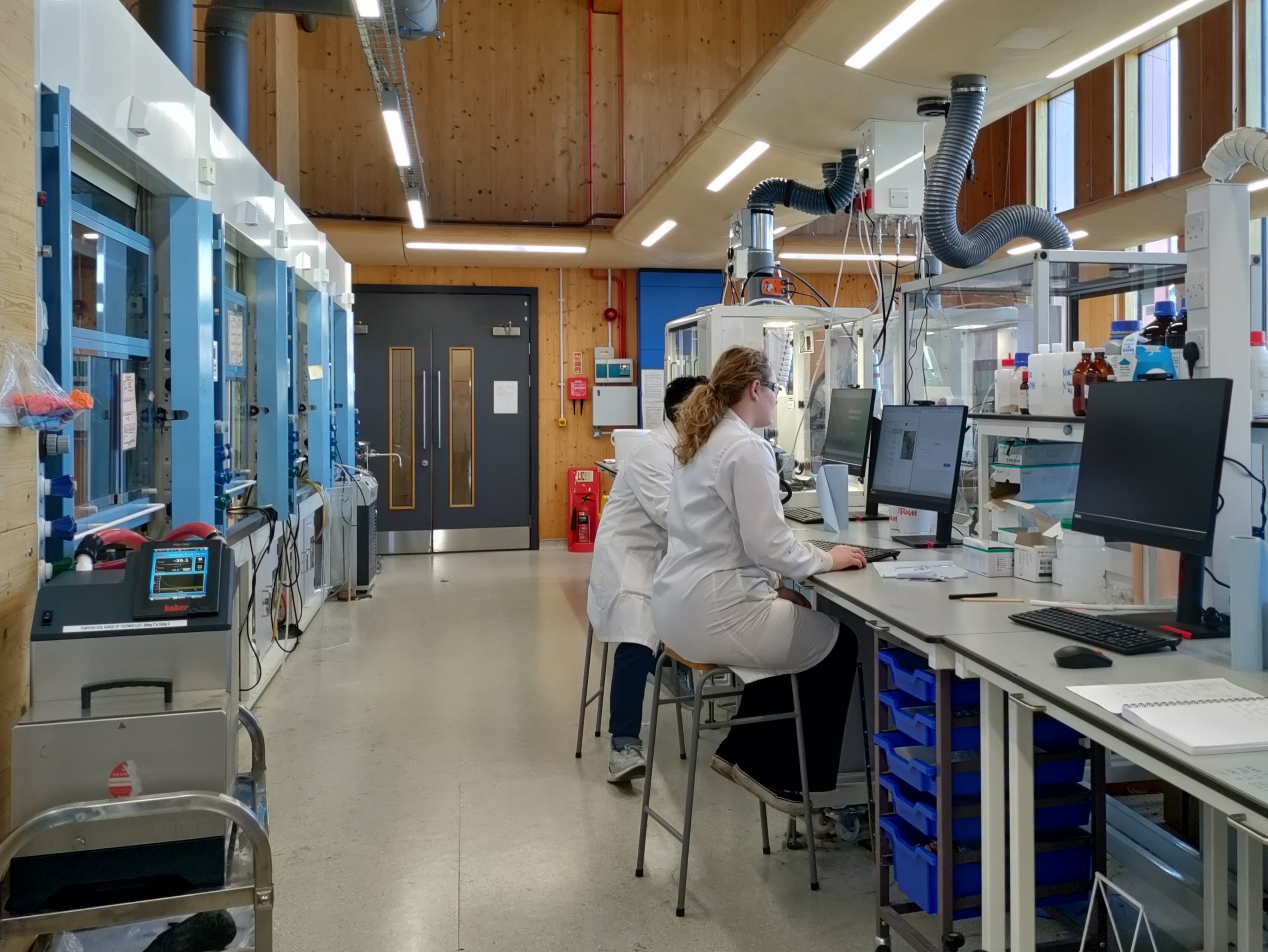
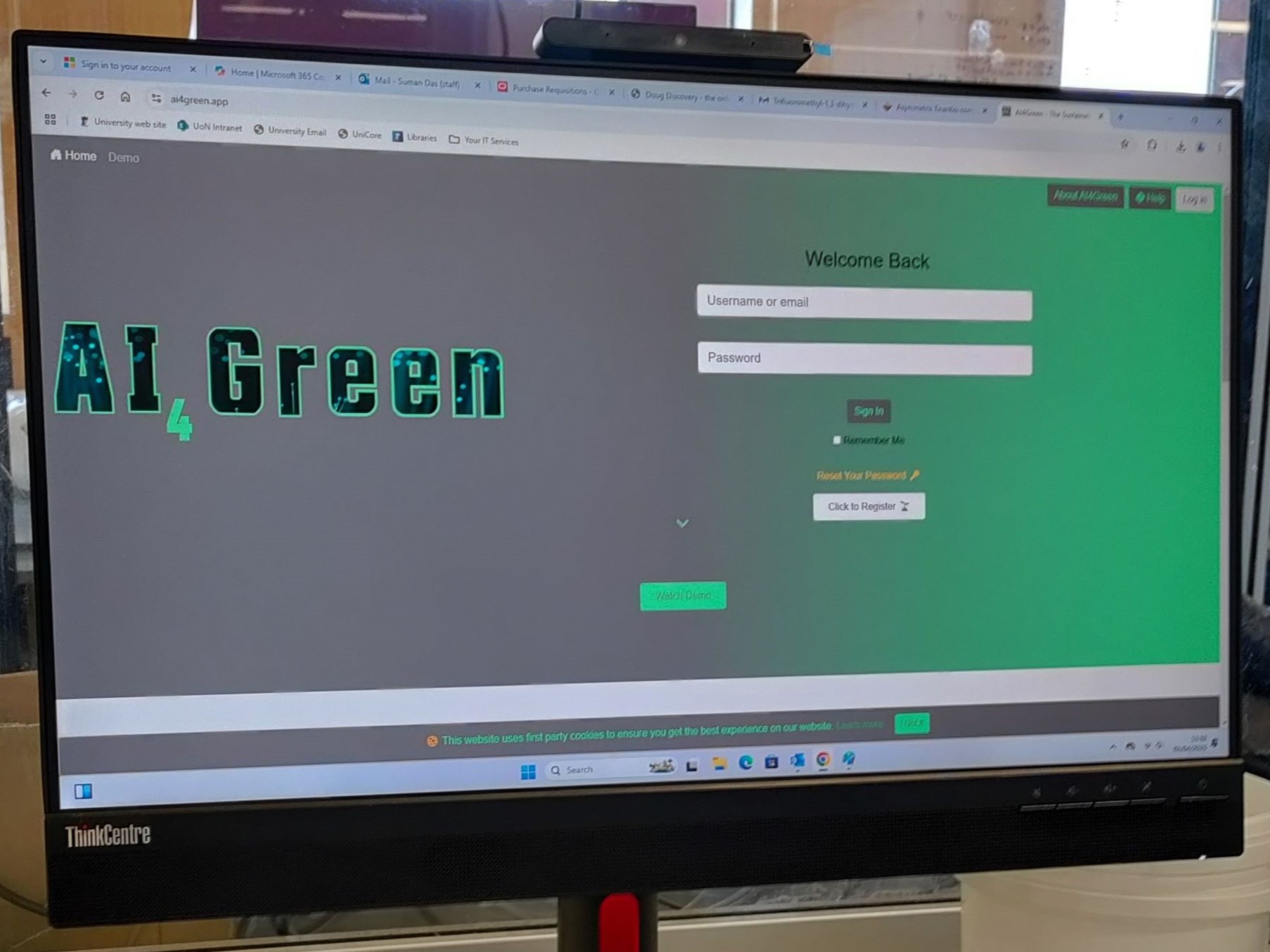
Thanks to Jonathan Hirst and a CNL infrastructure fund, the O’Duill group has been kitted out with a brand new suite of computers and has entered the era of electronic lab notebooks (AI4Green).
Group hike
Our annual group hike took us out to Bradgate Park yesterday. The dogs (and some of the group members) were able to burn off excess energy, while the rest of us enjoyed a leisurely walk. The fog soon lifted, and we ended the trip in a warm, sunny beer garden. Thank you to Ishbel and Olly for organising this one! It was a lot of fun.

RSC Organic Chemistry Community Midlands Regional Meeting 2025
Registration is now open for the RSC Organic Chemistry Community Midlands Regional Meeting at the University of Nottingham on 24th April 2025. The meeting is free to attend, but registration is required. To register, and for more information, please visit: https://www.rsc.org/events/detail/79680/rsc-organic-division-midlands-regional-meeting-2025
Please share this information with any colleagues, researchers, students and others who may be interested in the event.
The meeting will showcase synthetic chemistry (organic, chemical biology, medicinal) from across the Midlands region. Confirmed speakers include RSC MSD prize winner Prof. Matthew Powner (UCL), Dr Lona Alkhalaf (University of Warwick), Dr Andrey Antonchick (Nottingham Trent University), Prof. Liam Ball (University of Nottingham), Dr Stephen Fielden (University of Birmingham), and Dr Rebecca Ruscoe (Keele University), with a full programme to follow shortly.
The meeting will include a poster session, with entries encouraged from PhD students, postdocs and early career researchers. Researchers who would like to present a poster are asked to submit a short abstract (1 page maximum including a graphical abstract) through the conference website.
Phosphorus-iodonium ylid paper in press
Congratulations to Andrew on his first 1st author PhD paper, published in Beilstein Journal of Organic Chemistry today! Through the correlation of structural x-ray diffraction data and differential scanning calorimetry / thermogravimetric analysis, Andrew found interesting structure-stability correlations in phosphorus iodonium ylids. We hope that the insights gained from this study will stimulate the design of new hypervalent iodine compounds, expanding the functionalisation reactions currently available through these useful reagents in organic synthesis. Special thanks to our XRD expert Stephen and our collaborator Coby, whose expertise in thermal analysis was instrumental in bringing this project together.
For a link to the paper in Beilstein JOC, click here: https://www.beilstein-journals.org/bjoc/articles/20/245
A ChemRxiv preprint of this work is available here: https://chemrxiv.org/engage/chemrxiv/article-details/66d00fd4a4e53c4876f7d17b


We are hiring
We have a postdoctoral position available working on deuteration methodology for the synthesis of medical imaging agents (MRI).
Start date: asap. End date: 31 March 2025. Application deadline: 13 September 2024.
For more information and to apply, go to: https://jobs.nottingham.ac.uk/vacancy.aspx?ref=SCI346924
UoN Symposia
Team HVI brought a dose of hypervalent iodine chemistry to the recent Symposia at the University of Nottingham. Andrew and Charlotte presented their work at the Postgraduate Symposium and Suman spoke at the Dan Eley Postdoctoral Symposium. Both symposia were a great celebration of the research carried out in the department and led to fruitful scientific discussions.


CDT students defend their PhD projects
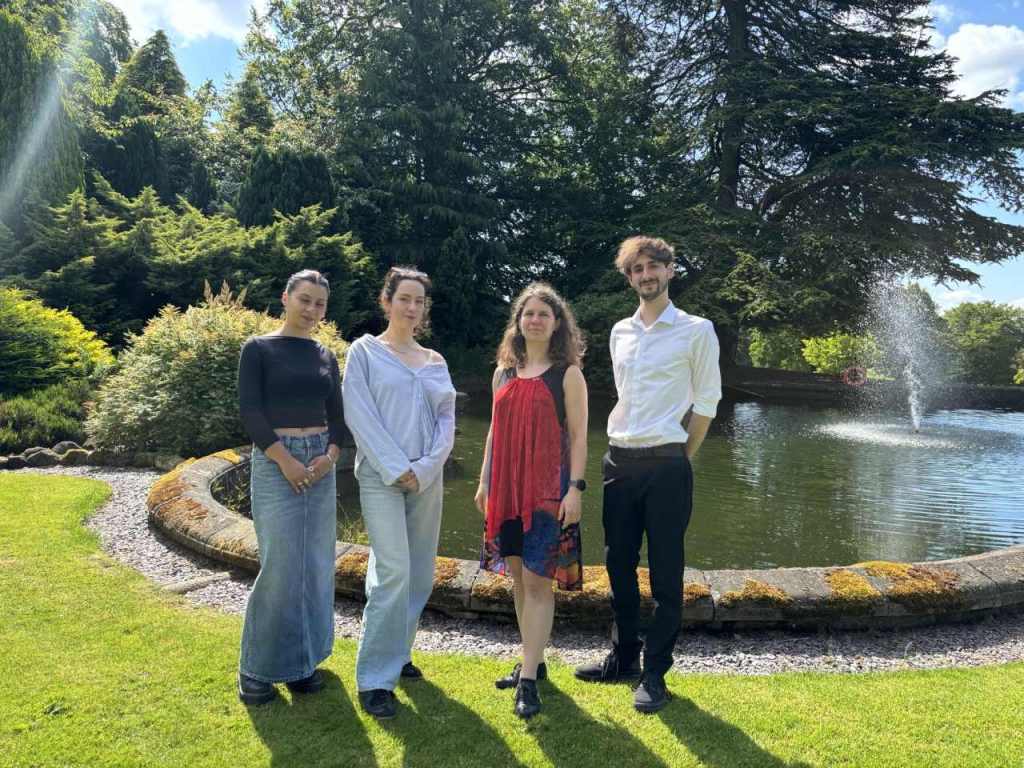
The students in our sustainable chemistry EPSRC/SFI Doctoral Training Centre successfully defended their PhD project proposals at the annual “Dragons’ Den” event last week. Well done to Maria, Ishbel, James and the entire Cohort 10!
2,2-Difluoroethylation paper in press in Angewandte Chemie
We present a new method for the 2,2-difluoroethylation of sulfur, nitrogen and oxygen pronucleophiles via a hypervalent iodine strategy in Angewandte Chemie today. We were able to generate (2,2-difluoroethyl)(aryl)iodonium triflate in situ and apply it to the electrophilic 2,2-difluoroethylation of heteroatom nucleophiles, including the drugs Captopril, Normorphine and Mefloquine. Competing alpha– and beta-elimination reactions are supressed by expedient choice of stabilising co-ligands and solvent. Congratulations to all the authors, Suman, Charlotte McI, Andrew, Charlotte S, and Stephen!
For a link to the paper in Angew. Chem. Int. Ed., click here: https://onlinelibrary.wiley.com/doi/epdf/10.1002/anie.202410954
A ChemRxiv preprint of this work is available here: https://chemrxiv.org/engage/chemrxiv/article-details/6667f4a4e7ccf7753a7ce502
Liam’s graduation
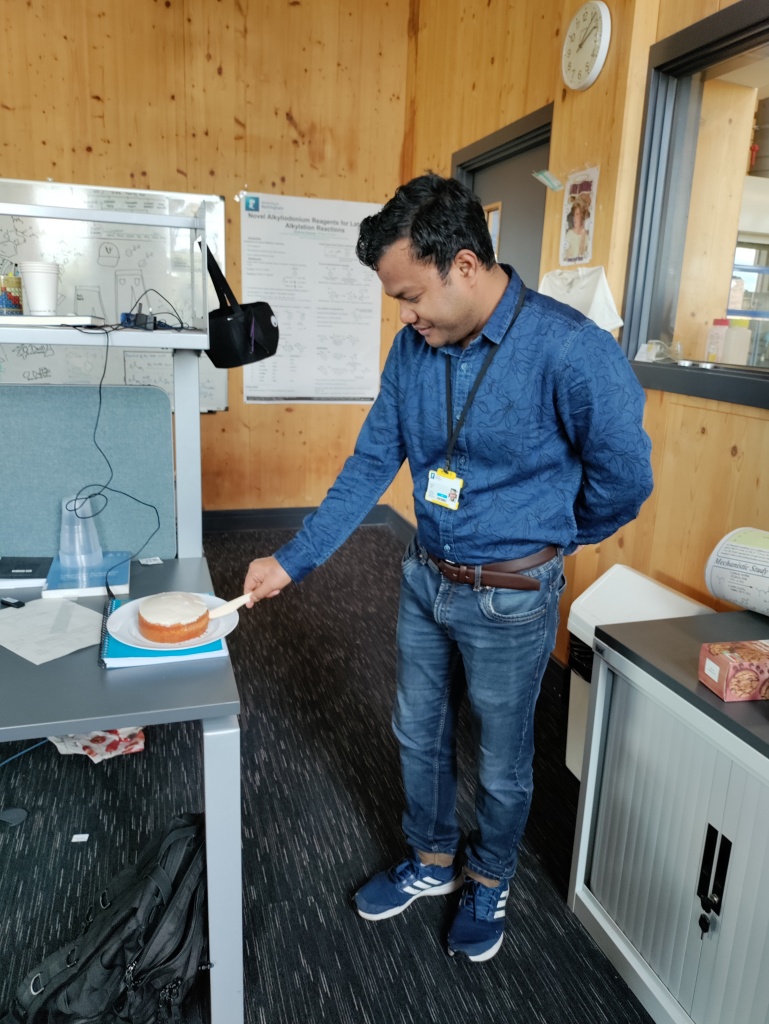
Congratulations to Liam Fitzgerald, who was officially awarded his PhD degree by the University of Galway last week. Liam developed new deuteration approaches in the O’Duill group and is currently working as a Senior Scientist at Pharmaron. We’re excited to follow his future scientific career.

 The O'Duill Group